
Brazilian Jiu-Jitsu is often seen through the lens of competition: medals, submissions, positional battles and the technical contest between two trained athletes. But every so often, an incident away from the mats demonstrates why the art was built around something more fundamental—the ability to protect yourself or another person through control rather than unnecessary damage.
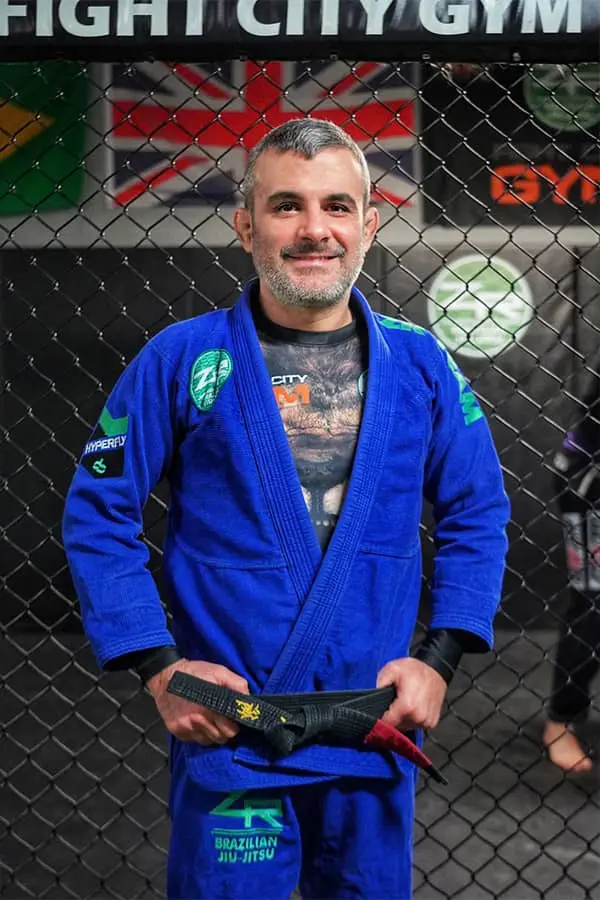
Alain Pozo, Brazilian Jiu-Jitsu black belt and UK Head Coach of ZR Team, has received a Metropolitan Police Commander’s Commendation following his actions during an incident on Balham High Street in London.
According to Alain’s account, he saw a security guard struggling with a suspected shoplifter. The security guard was being assaulted and appeared to be in danger. Alain intervened, using the judgement and control developed through decades of martial-arts training to help bring the situation under control.
The commendation recognises exceptional courage and service to the community. It also provides a powerful, real-world example of what responsible Brazilian Jiu-Jitsu can look like when circumstances demand action.
Why Brazilian Jiu-Jitsu was relevant
Brazilian Jiu-Jitsu is a grappling-based martial art built around leverage, balance, positioning and control. Students learn how to manage another person’s movement, escape from disadvantaged positions and restrain an opponent without depending entirely on size or physical strength.
That distinction matters in a real confrontation. Striking may cause immediate injury and can rapidly escalate an already dangerous situation. Grappling can provide options for controlling distance, disrupting balance, securing a dominant position and restraining someone until help arrives.
No martial art can remove the uncertainty of a street incident. Weapons, multiple aggressors, hard surfaces and bystanders can transform a situation without warning. Avoidance, awareness and de-escalation must therefore remain the first choices whenever they are available.
But when intervention becomes necessary, the ability to control another person without panicking—and without relying on uncontrolled force—can be invaluable.
Proportionate force, composure and responsibility
The most important lesson from Alain’s intervention is not simply that a highly trained black belt was capable of stopping somebody. That should surprise nobody. The meaningful point is that technical training creates choices.
A trained grappler can understand where their weight should be placed, how to prevent somebody standing up, how to protect themselves from uncontrolled movement and when a position is secure enough to wait for the police. They also learn when to release pressure and how to recognise when further force is no longer necessary.
Those are practical skills, but they are inseparable from character. Good coaching teaches restraint, awareness and responsibility alongside technique. The objective is never to chase confrontation or prove toughness in public. The objective is to act sensibly, protect life and reduce harm.
Alain Pozo and the ZR Team lineage
Alain Pozo is one of the central figures in the development of ZR Team in the United Kingdom. He was among the early students of the renowned Zé Radiola academy in Brazil and later established the first ZR Team affiliation in the UK.
Across decades of training and coaching, Alain has developed successful practitioners and helped build a network known for structured technical development, high standards and authentic Brazilian Jiu-Jitsu lineage. His influence extends through ZR Team academies and coaches across the country.
Onyx ZR Team Northampton is part of that same wider affiliation. Our students benefit from a connected system of coaching, progression and technical knowledge rather than a collection of unrelated techniques. The lineage matters because it represents accountability: coaches learning from proven coaches, students progressing through a recognised structure and standards being maintained across generations.
Alain’s commendation reflects the same principles that quality academies should reinforce every day—discipline, composure, service and the responsible use of skill.
Self-defence is more than a list of techniques
A self-defence programme is incomplete if it teaches only takedowns, escapes or submissions. Real personal safety begins much earlier:
- Awareness: noticing developing danger and identifying exits before a confrontation begins.
- De-escalation: using calm communication, distance and judgement to prevent violence where possible.
- Positioning: protecting your balance, managing space and avoiding being trapped.
- Control: using leverage and dominant position when physical intervention cannot be avoided.
- Restraint: applying no more force than is necessary to create safety.
- Decision-making: recognising weapons, multiple people and other circumstances in which disengagement is the safest option.
Brazilian Jiu-Jitsu develops these abilities through live, progressive resistance. Techniques are not practised only against compliant movements. Students learn to solve problems against training partners who are actively trying to maintain posture, escape control or improve their own position.
That process builds technical competence, but it also builds familiarity with pressure. Students learn to breathe, think and make decisions while somebody is resisting them. In a genuine emergency, that ability to remain composed may be as important as any individual technique.
From the competition mat to the wider community
Competition remains an important part of Brazilian Jiu-Jitsu. It tests technique, creates measurable goals and teaches students how to perform under pressure. ZR Team has an international reputation for producing accomplished competitors and coaches.
But medals are not the only measure of what training produces. Confidence without aggression, fitness with purpose, the ability to protect another person and the judgement to act responsibly are equally valuable outcomes.
Alain’s recognition illustrates that broader value. The movements developed through years of grappling mattered, but so did the willingness to help a stranger, the composure to intervene and the discipline to control the situation.
Learning practical Brazilian Jiu-Jitsu in Northampton
At Onyx ZR Team Northampton, our grappling programme develops takedowns, positional control, escapes, guard work, submissions and the decision-making that connects them. Training is suitable for complete beginners as well as experienced practitioners, with structured coaching for adults and young people.
Students can train Brazilian Jiu-Jitsu and submission grappling as a sport, for fitness, for competition or as part of a broader approach to self-defence. Whatever brings somebody through the door, the standards remain the same: learn carefully, train responsibly, protect your partners and use your skills with good judgement.
The Commander’s Commendation awarded to Alain Pozo is deserved recognition of one intervention on one London street. Its wider significance is the reminder it offers to every martial artist: ability carries responsibility, and the highest purpose of training is not to seek conflict—it is to be capable of responding properly when somebody genuinely needs help.
Learn Brazilian Jiu-Jitsu in Northampton.
Your first class at Onyx ZR Team Northampton is free. Experience structured coaching, progressive resistance and a complete grappling system.
Book a free first class