
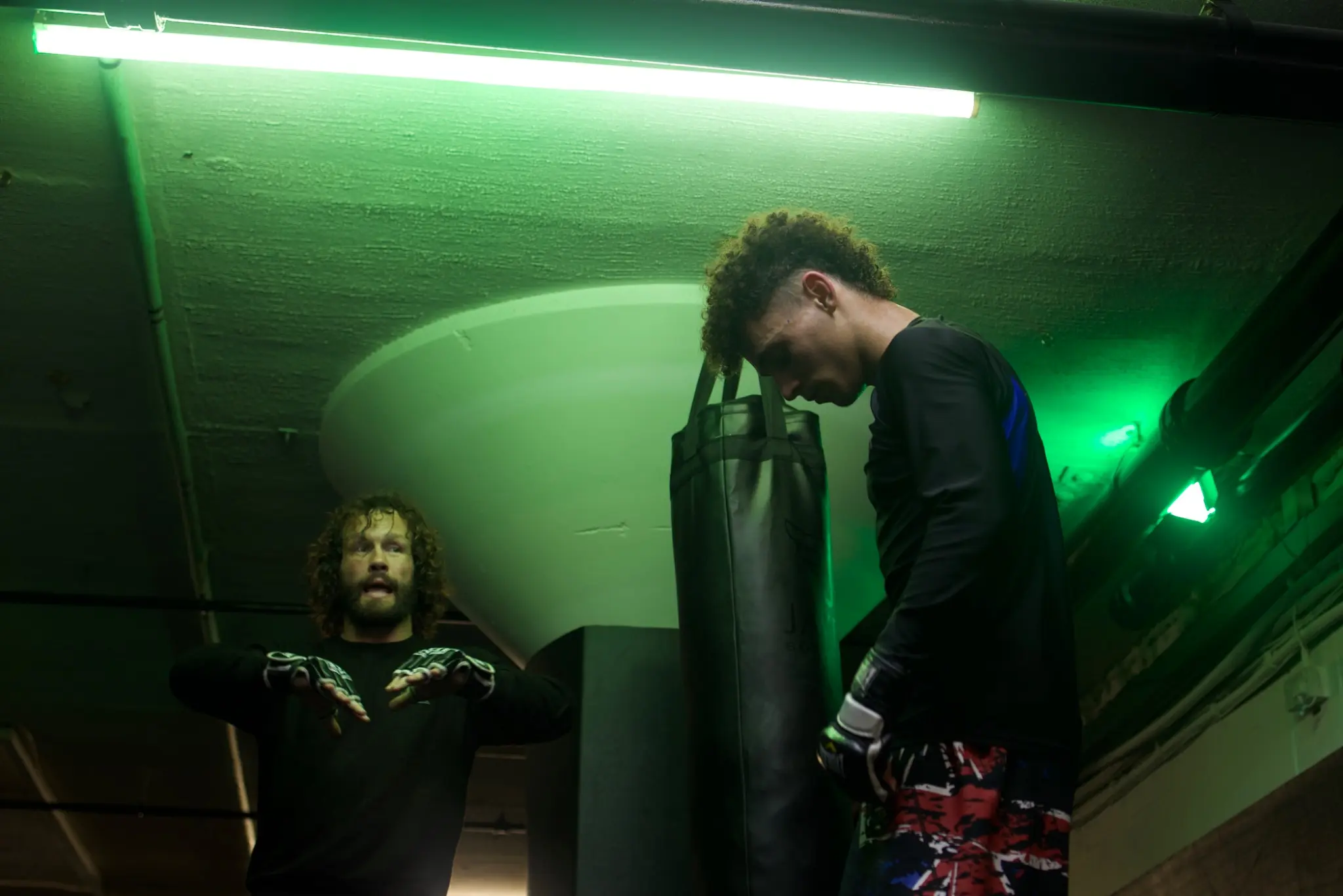
There are martial arts books that give you a collection of moves. Then there are books that reveal how a great coach sees the entire fight.
Brazilian Jiu-Jitsu: For Experts Only, written by Carlson Gracie with Julio “Foca” Fernandez, belongs in the second category. It covers takedowns, guard passing, sweeps, chokes, joint locks, escapes, clinch work, takedown defence and striking-aware ground fighting. But the biggest lesson is not any one technique.
The real lesson is this: Brazilian Jiu-Jitsu cannot be understood as a pile of disconnected tricks. It is a complete system, and every rule set asks a different question of that system.
“For experts only” is a challenge, not a closed door
The title sounds exclusive. The introduction makes the opposite point. Expertise is not presented as something reserved for a chosen few. It is a standard to pursue.
The qualities Carlson valued were not simply natural athletic ability. Commitment mattered. Loyalty mattered. The willingness to face difficult work mattered. An expert was not somebody who believed they had finished learning. It was somebody who kept working at the edge of their ability.
That distinction matters within the Onyx ZR Team Northampton grappling programme. Beginners do not need to arrive with an expert's knowledge. They need an expert's attitude: listen carefully, practise consistently, accept correction and refuse to look for shortcuts.
Three arenas. One complete martial artist.
The book separates Brazilian Jiu-Jitsu into three connected arenas: sport Jiu-Jitsu, submission grappling and vale-tudo or mixed martial arts. They share a technical foundation, but the rules change the priorities.
That is vital. A grip, posture or guard that works brilliantly in a gi contest may have to change when there is no jacket. A position that feels safe in submission grappling may become dangerous when punches are legal. The art remains connected, but the environment demands adaptation.
Sport Brazilian Jiu-Jitsu: precision through control
The gi creates friction and gives both athletes powerful gripping options. Collars, sleeves and trousers can control posture, slow movement, create sweeps and open submission pathways that do not exist in No-Gi.
Sport BJJ also rewards positional progress. Takedowns, sweeps, guard passing, knee-on-belly, mount and back control are not random scoring events. They map the increasing control of one athlete over another.
This environment sharpens posture, balance, defence and technical detail. You learn that a small grip adjustment can change an entire exchange. You learn to manage layers of control before chasing the submission.
Submission grappling: speed, movement and exposure
Remove the gi and the contest changes immediately. There is less friction, fewer cloth grips and greater freedom of movement. Escapes can become faster. Scrambles become more common. Leg attacks and wrestling connections take on greater importance.
The absence of a collar does not make the sport less technical. It changes the technical problem. Control must come from body position, wedges, underhooks, head position, limb isolation and intelligent pressure.
This is why submission grappling is such an effective meeting point between wrestling, Judo, Brazilian Jiu-Jitsu and other grappling styles. Techniques are tested in a common environment, and anything that depends on cooperation is exposed very quickly.
MMA: every position has consequences
Mixed martial arts adds the variable that changes everything: strikes.
Closed guard is no longer simply a sweeping and submission platform; it must also manage punches. A loose top position can give an opponent room to stand. A slow transition may create a striking opportunity. A takedown entry must consider knees, uppercuts, guillotines and the possibility of being sprawled on.
The book's MMA material moves through clinch takedowns, takedown defence, striking from guard, submissions from guard and attacks from side control and knee-on-belly. The point is not that every grappler must become a professional fighter. The point is that a complete system understands how its positions behave when the conditions change.
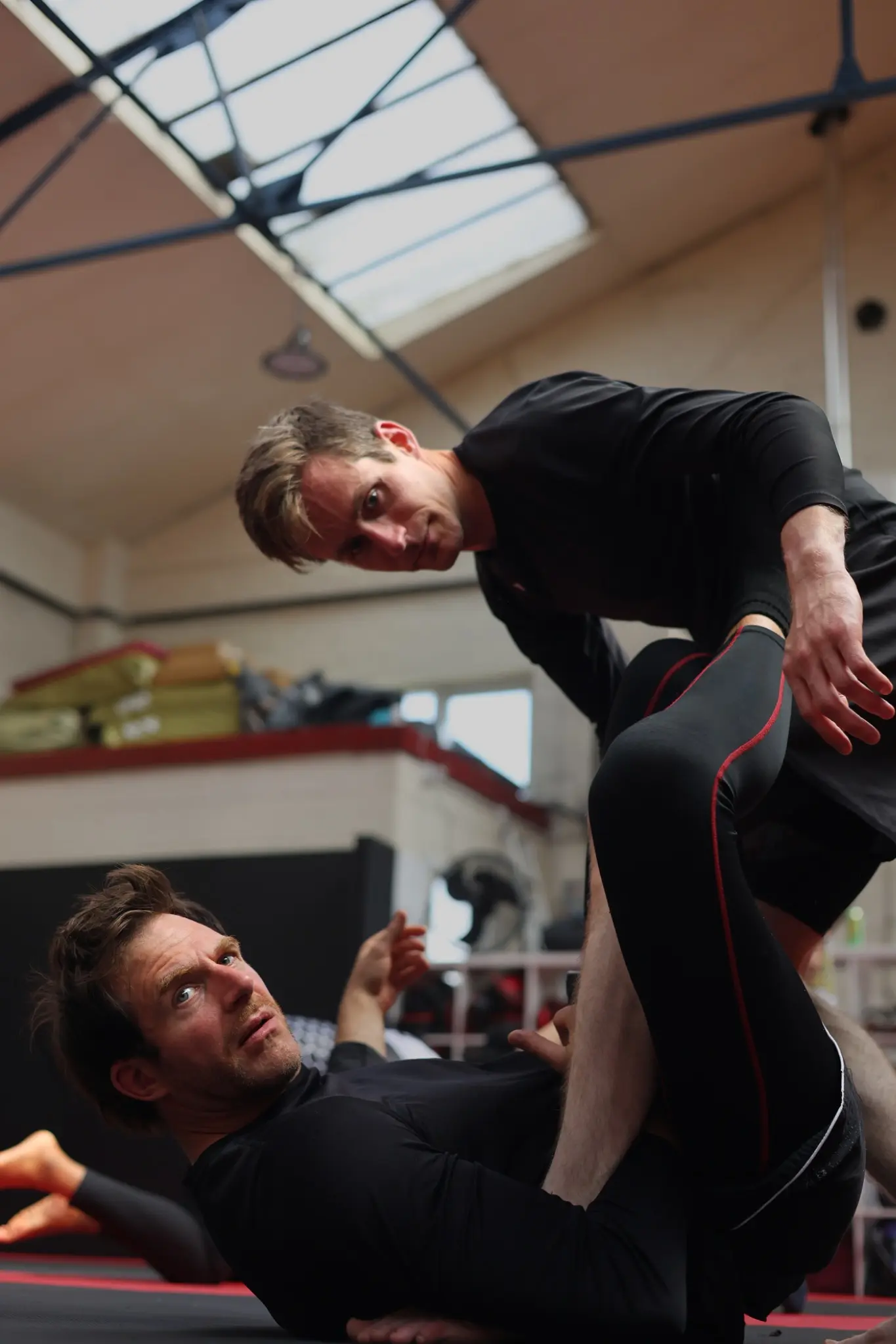
The Carlson Gracie “warrior” approach
Carlson Gracie's influence was not limited to individual techniques. His approach was associated with physical preparation, pressure and combinations of attacks. Rather than waiting passively for a perfect opening, the athlete created problems, forced reactions and attacked again.
That does not mean abandoning technique for aggression. It means using technique with intent. Pressure without control is wasted energy. Control without the willingness to advance becomes stagnation. The two have to work together.
A strong grappler should be able to take somebody down, pass a guard, hold a dominant position, recognise a submission, defend intelligently and continue working when the first option fails. The attack is not one movement. It is a sequence.
Repetition turns knowledge into reaction
The book makes a point that every serious athlete eventually discovers: understanding a movement intellectually is not enough.
“It's more important for your muscles to learn a move than for your brain to learn it.”
The meaning is clear. Under live resistance, there is rarely time to recite a list of instructions. Recognition and movement must become fast, familiar and reliable. That only happens through correct repetition.
But repetition does not mean performing a dead sequence without thought. Good drilling builds the movement. Positional sparring adds realistic reactions. Live rounds test recognition and timing. Coaching then identifies the detail that needs to return to the drilling stage.
That cycle—learn, drill, test, correct and repeat—is how technique becomes usable.
Train hard. Do not train yourself flat.
One of the document's most practical lessons is also one of the most ignored. Hard-working athletes can become addicted to exhaustion. They judge every session by how ruined they feel afterwards.
That is not the same as productive training.
The goal is to work hard enough to become sharp, not so hard that performance collapses. Competition preparation should build towards the event. After competition, intensity may need to fall so the body and mind can recover before the next cycle begins.
More is only better when you can absorb it. Intelligent training balances technical quality, live work, physical preparation, sleep and recovery. The athlete who is always exhausted cannot consistently learn, react or compete at their best.
A curriculum built around the whole exchange
The structure of the book shows what a complete programme looks like. It does not begin and end with submissions.
- Takedowns and clinch work decide where the contest takes place.
- Guard passing develops posture, pressure and routes around the legs.
- Sweeps and reversals turn defensive positions into attacking ones.
- Chokes and joint locks provide decisive finishes when control is established.
- Escapes and defences build composure in bad positions.
- Striking-aware grappling tests whether positions remain sound when the rules expand.
This is the principle behind a serious grappling programme. Students need depth in individual areas, but they also need to understand the links. A takedown connects to a pass. A pass connects to a pin. A pin creates a submission. A failed submission creates a transition. An escape may become a reversal or a return to the feet.
Legacy is measured through students
Carlson Gracie's historical importance is inseparable from his coaching. The book describes a teacher who opened advanced knowledge to a wider group of students and helped create generations of successful grapplers and fighters.
That is the real measure of a system. It should not work for one gifted individual alone. It should give different students a clear structure for improvement. It should develop competitors, recreational practitioners, coaches and future leaders.
Julio “Foca” Fernandez represents that continuation: a long-term Carlson Gracie student, accomplished competitor and coach committed to transmitting the art completely. Technique survives because people teach it, test it and pass it forward.
What this means at Onyx ZR Team Northampton
Our aim is not to produce students who know hundreds of moves but cannot connect them. It is to develop grapplers who understand where they are, what the opponent is trying to do and which decision moves the exchange in their favour.
That means learning takedowns as well as ground work. It means developing guard, passing, pins, escapes and submissions. It means training in the gi and without it. It means understanding the demands of sport competition, submission grappling and MMA—even if competing is never your personal goal.
The rules may change. The standard does not: technique that works against resistance, pressure that has purpose, and training that makes you better without sacrificing your partner or yourself.
Build a complete grappling game.
Your first class at Onyx is free. Experience structured Brazilian Jiu-Jitsu, wrestling, submission grappling and MMA coaching in Northampton.
Book a free first class