
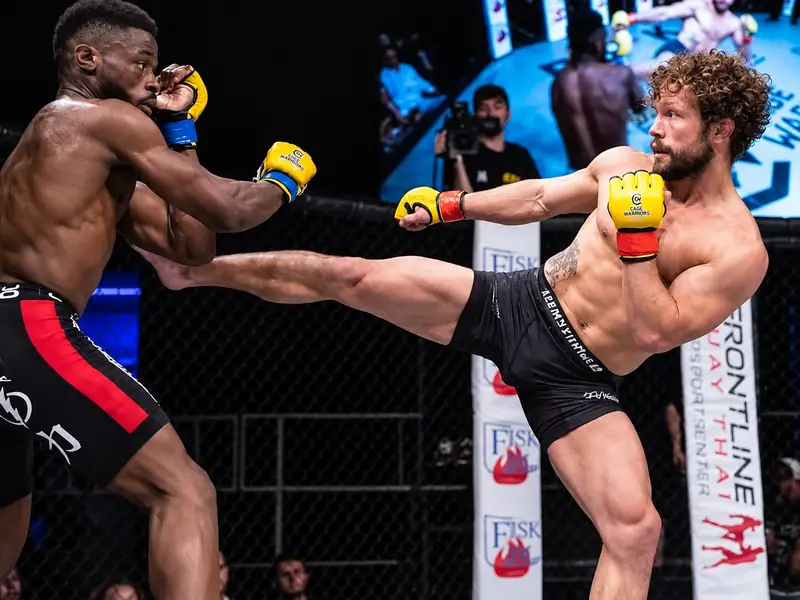
Why MMA striking is not simply Kickboxing in smaller gloves
In a dedicated striking ruleset, the athlete can organise stance and combinations around striking threats. MMA adds level changes, takedowns, clinch entries and ground transitions. That changes which positions feel safe.
Stance has to respect the takedown
A stance that works well for a pure striking exchange may need adjustment when an opponent can attack the legs or connect punches directly to a takedown entry. MMA striking therefore involves managing both striking distance and takedown access.
Combinations have different consequences
Every extra strike can create an opportunity, but it can also leave the athlete planted or overextended. MMA combinations need to finish in positions from which the athlete can defend a counter, clinch or takedown.
The clinch changes the middle distance
Closing distance does not necessarily end the exchange. It may begin hand fighting, cage control, knees, short strikes or takedown attempts.
Why dedicated Kickboxing can still help MMA
A dedicated Kickboxing class gives concentrated time to stance, combinations, distance, timing and defensive movement. Those skills can support MMA development, but they still need adapting to MMA's additional threats.
Can a complete beginner start with MMA?
Yes. The current MMA classes in Northampton are beginner-friendly. It is normal for first-time MMA students to feel overloaded because several ranges are being introduced at once.
Our MMA beginner guide explains what to expect when starting from zero.